

Heavy Structural Fabrication for Industrial and Construction Projects
Large industrial structures need more than ordinary metal fabrication. Factory buildings, equipment platforms, pipe racks, heavy machine bases, mezzanine floors and structural frameworks must handle significant loads while maintaining strength and stability for long-term use.
This is where Heavy Structural Fabrication becomes important.
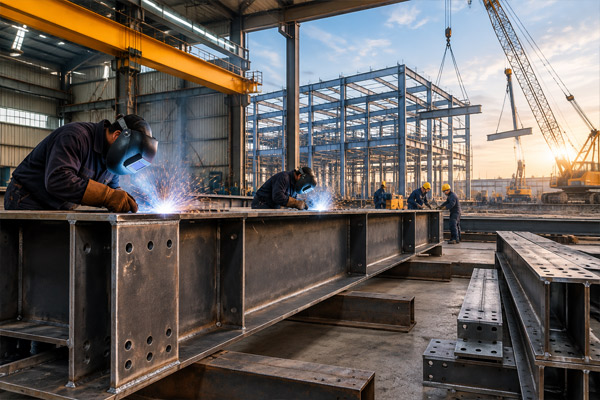
Heavy structural fabrication converts steel plates, beams, channels, angles and other structural sections into strong assemblies according to approved engineering drawings and project requirements.
Vinayak Industries provides fabrication solutions for industrial, engineering and construction projects where strength, dimensional accuracy and reliable workmanship are essential.
What Is Heavy Structural Fabrication?
Heavy Structural Fabrication is the process of cutting, shaping, fitting, welding and assembling heavy steel sections to manufacture load-supporting structures.
Unlike light sheet metal fabrication, heavy structural work generally involves larger and thicker components designed for demanding industrial or construction applications.
Typical fabricated components can include:
- Structural columns
- Steel beams
- Roof trusses
- Equipment support frames
- Heavy machine bases
- Mezzanine structures
- Industrial platforms
- Pipe racks
- Walkways
- Staircases
- Structural frames
- Industrial shed components
Every structure should be fabricated according to its engineering drawings, material specifications and intended loading conditions.
Why Is Heavy Structural Fabrication Important?
Industrial structures are often exposed to heavy loads, machinery vibration, weather conditions and continuous operation.
Poor fabrication can create problems such as incorrect alignment, difficult installation, weak joints, dimensional mismatch and premature deterioration.
Proper structural fabrication helps ensure that individual steel members are manufactured and assembled according to the project design.
Accuracy becomes especially important when multiple fabricated components need to connect during site installation.
Heavy Structural Fabrication Process
Heavy fabrication involves several coordinated manufacturing stages.
The exact sequence depends on the structure, material and project specifications.
1. Drawing and Project Review
Fabrication should begin with a detailed review of engineering drawings.
Important information can include:
- Dimensions
- Material grade
- Plate thickness
- Structural sections
- Hole locations
- Welding requirements
- Connection details
- Surface treatment
- Tolerances
Any unclear details should be resolved before fabrication begins.
2. Material Selection
Material is selected according to engineering specifications and application requirements.
Mild steel is commonly used for many structural fabrication projects because of its strength, availability and fabrication characteristics.
Other materials may be required depending on corrosion conditions, environment and application.
3. Material Cutting
Steel plates, beams, channels and other sections are cut according to the required dimensions.
Depending on the component, cutting processes can include suitable mechanical or CNC-based methods.
Accurate cutting is important because errors at this stage can affect fitting and assembly later.
4. Drilling and Hole Preparation
Many structural components require holes for bolts and other connections.
Hole diameter, position and spacing should match the engineering drawing so components can be assembled correctly at the project site.
5. Bending and Forming
Some structural components may require bending or forming.
Suitable machinery is selected according to material thickness, component dimensions and required geometry.
6. Fit-Up and Alignment
Before final welding, individual parts are positioned and checked.
Correct fit-up helps maintain:
- Alignment
- Dimensions
- Joint gaps
- Angles
- Connection positions
This step is particularly important for large structural assemblies.
7. Welding
After fit-up, components are joined using an appropriate welding process according to project requirements.
Welding quality is important because structural joints may be required to carry significant loads.
Welding procedures and inspection requirements should follow the applicable project specifications and engineering standards.
8. Inspection
Fabricated components should be inspected before dispatch.
Inspection can include dimensional verification, visual weld inspection, alignment checks and other specified quality tests.
Main Components Used in Heavy Structural Fabrication
Applications of Heavy Structural Fabrication
Heavy Structural Fabrication is widely used in industries where strong and durable steel structures are required to support equipment, machinery, buildings and heavy loads. Fabricated structures can be customised according to engineering drawings and specific project requirements.
Why Choose Vinayak Industries for Heavy Structural Fabrication?
Vinayak Industries provides metal and structural fabrication solutions in Ahmedabad, Gujarat.
Its fabrication capabilities include processes such as cutting, bending, welding, forming, machining and assembly.
For heavy structural requirements, the company can work on custom industrial components and structures according to customer drawings and specifications.
Related fabrication capabilities include:
- Structural fabrication
- Heavy duty steel fabrication
- MS fabrication
- SS fabrication
- Sheet metal fabrication
- CNC laser cutting
- Bending work
- Piping fabrication
- Custom industrial fabrication
Having multiple fabrication processes available through one supplier can help simplify coordination when a project requires different metalworking operations.
Frequently Asked Questions About Heavy Structural Fabrication
Heavy Structural Fabrication is the process of cutting, shaping, fitting, welding and assembling heavy steel sections and plates to manufacture industrial and load-supporting structures.
Mild steel is commonly used for many heavy structural applications. The exact material and grade should be selected according to engineering specifications and project requirements.
Typical products include columns, beams, industrial frames, machine bases, mezzanine structures, platforms, pipe racks, walkways and structural supports.
Yes. Structural fabrication is widely used to manufacture columns, beams, trusses, bracing and other components for engineered factory and industrial shed structures.
Yes. Structural components can be fabricated according to approved customer or engineering drawings, dimensions, material specifications and project requirements.
Provide engineering drawings, material grade, dimensions, structural sections, plate thickness, quantity, welding requirements, finishing requirements and delivery details.
Heavy Structural Fabrication focuses mainly on larger load-supporting steel structures, while sheet metal fabrication commonly produces thinner components such as cabinets, covers, enclosures and brackets.
Welding joins structural members together. The welding procedure, workmanship and inspection must meet the requirements specified for the structure.
Many structures require suitable surface preparation, primer, paint or another protective treatment. The appropriate coating depends on the environment and project specification.
Vinayak Industries provides structural and heavy-duty steel fabrication solutions in Ahmedabad for industrial, engineering and construction requirements.
Conclusion
Heavy Structural Fabrication plays an important role in industrial construction, machinery installation and infrastructure development. From factory frames and machine bases to mezzanine floors, pipe racks, platforms and equipment supports, every fabricated component must meet the dimensions and specifications defined by the project design.
Successful heavy fabrication depends on more than cutting and welding steel. Material selection, drawing review, accurate fabrication, proper fit-up, welding quality, inspection and surface protection all contribute to the finished structure.
Vinayak Industries provides Heavy Structural Fabrication solutions in Ahmedabad for custom industrial and construction requirements. With capabilities covering structural fabrication, heavy-duty steel fabrication, CNC cutting, bending, welding and related metalworking processes, projects can be manufactured according to customer drawings and technical requirements.