

Modern Tech in Structural Fabrication
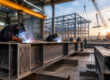
Buildings are getting taller, bridges are stretching further, and factories are becoming more complex. To meet these massive demands, the way we build the steel skeletons of these structures had to evolve.In the past, making steel parts took a massive amount of heavy manual labor, which was often slow and prone to human error. Today, modern machines and smart computer software have completely changed how fabrication work is done. By embracing modern steel fabrication technology, builders can create safer, stronger, and more exact structures. At the heart of this building revolution are Structural Fabrication Services, which act as a key part of modern infrastructure, turning raw metal into the reliable frameworks that hold our world together.
What Are Structural Fabrication Services?
Before diving into the technology, it is important to understand the process. Structural Fabrication Services involve taking raw steel and transforming it into specific, usable shapes for building. This is not just a single step; it is a complex process of cutting, bending, welding, and assembling steel structures.
These services are absolutely essential for constructing tall commercial buildings, massive storage warehouses, busy factories, long highway bridges, and heavy industrial plants. Because no two buildings are exactly the same, this is not a one-size-fits-all process. Every single beam, column, and truss is a result of custom fabrication based on precise project drawings created by architects and structural engineers.
Why Modern Technology Matters in Structural Fabrication Services
Why have fabrication shops spent millions of dollars upgrading from hand tools to advanced computers and robots? The shift to modern technology provides amazing benefits for both the builder and the final customer.
Modern Technology Used in Structural Fabrication Services
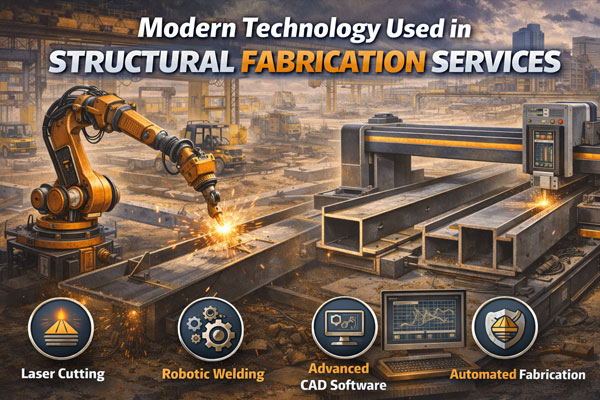
The modern fabrication shop looks more like a high-tech science lab than a dusty metal workshop. Here is a look at the specific machines and technologies driving precision fabrication solutions.
CNC Plasma and Laser Cutting Machines
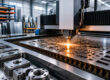
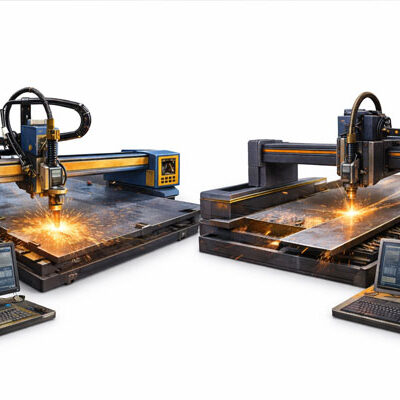
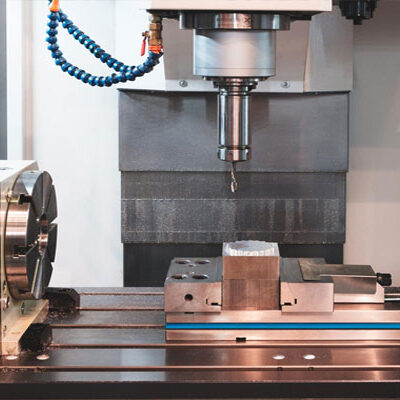
In the old days, workers used hand-held torches to cut metal. Today, shops use CNC steel cutting machines. CNC stands for Computer Numerical Control. These machines use a computer to guide a high-powered laser or plasma torch over the metal. This results in highly accurate steel cutting that is incredibly smooth. Because the computer guides the beam at high speeds, it allows for fast production without any mistakes.
Robotic Welding Systems
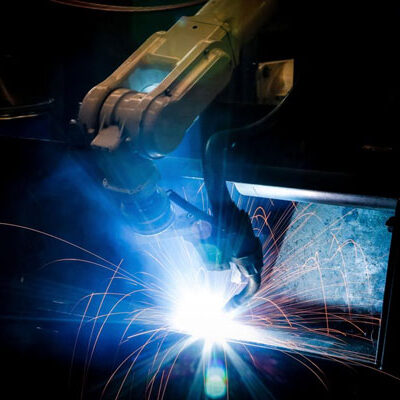
Welding is the process of melting two pieces of steel together. Welding technology in fabrication has taken a massive leap forward with the introduction of robots. Robotic welding systems have mechanical arms that perform the welds. They offer incredibly consistent weld quality because the robot moves at the exact same speed and temperature every single time. This leads to higher productivity and stronger, safer joints.
CAD Design Software
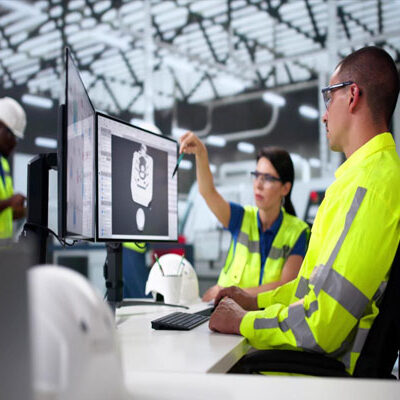
Before a single piece of metal is cut, the entire building is built inside a computer. Engineers use CAD (Computer-Aided Design) software for detailed 2D and 3D design planning. This allows them to see how every single steel beam will connect, test for weak spots, and make changes before the physical work begins.
CAM Production Systems
Once the CAD design is finished, it is sent to a CAM (Computer-Aided Manufacturing) system. This brilliant software acts as a translator. It converts the 3D design into a machine process, writing the specific code that tells the CNC cutting and bending machines exactly where to move and what to do.
Hydraulic Press Brakes
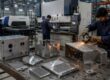
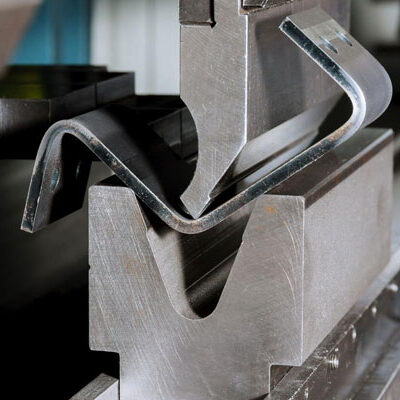
When structural steel fabrication requires a flat piece of steel to be bent into an angle, shops use hydraulic press brakes. These are giant, powerful machines that push down on the steel with hundreds of tons of pressure. They provide precision steel bending, ensuring the angle is exactly what the engineers requested.
Shot Blasting Machines
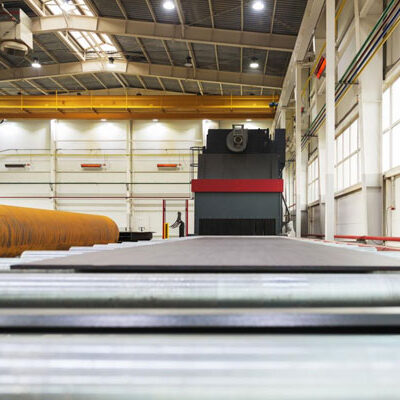
You cannot paint rusty or dirty steel. Before the steel is finished, it goes through a shot blasting machine. This machine acts like a high-powered sandblaster, shooting tiny steel balls at the metal to remove all rust, dirt, and old scale. This provides perfect surface cleaning before coating.
Powder Coating and Painting Systems
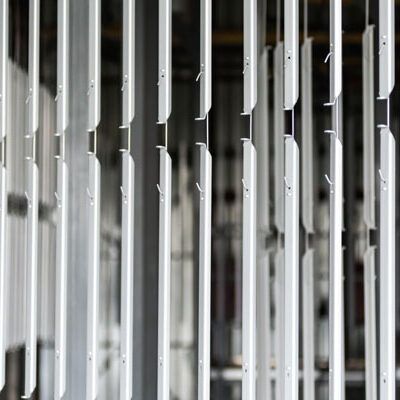
To protect the steel from rain and weather, it must be coated. Modern fabrication shops use automated powder coating and painting systems. Instead of a worker with a brush, machines spray a perfectly even layer of protective paint or powder onto the steel. This ensures excellent corrosion protection and a beautiful, better finish.
Quality Testing Equipment
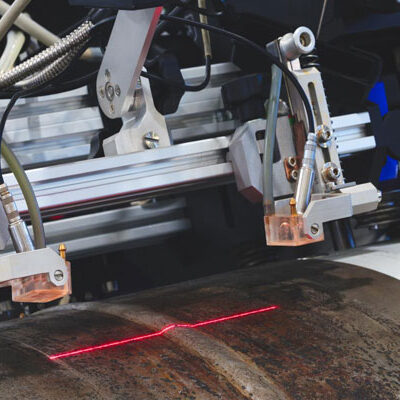
Safety is the most important part of steel structure manufacturing. Modern shops use advanced quality testing equipment. They use X-rays and ultrasonic scanners for hidden weld testing to ensure there are no cracks inside the joints. They use lasers for exact dimension checks, and computer models for load checks to guarantee the steel will safely hold the building up.
Traditional Fabrication vs Modern Fabrication
| Feature | Modern Technology Fabrication | Traditional Fabrication |
| Cutting Method | Automated CNC Lasers and Plasma | Manual cutting with hand torches |
| Accuracy | Extremely high (measured in millimeters) | Moderate (depends on the worker’s skill) |
| Production Speed | Very fast; machines run continuously | Slow; limited by human energy and speed |
| Material Waste | Very low; software plans the best cuts | High; lots of scrap metal left over |
| Welding Quality | Perfect and consistent (Robotic) | Varies from weld to weld (Manual) |
| Safety Levels | Very high; machines do the dangerous work | Lower; high risk of burns and accidents |
Industries Using Advanced Structural Fabrication
- Because steel is the backbone of the modern world, industrial fabrication services are needed by a wide variety of sectors. The industries that rely most heavily on this advanced technology include:
- Construction companies: For building tall skyscrapers, apartment complexes, and large shopping malls.
- Warehouses: For creating massive, wide-open logistics and shipping centers without too many supporting pillars.
- Infrastructure projects: For constructing highway bridges, railway stations, and airport terminals.
- Power plants: For building the heavy-duty frameworks needed to hold massive energy turbines and solar panel arrays.
- Manufacturing industries: For creating the large industrial sheds and factory floors where cars and goods are made.
- Commercial buildings: For building safe, durable office parks and large retail stores.
How to Choose a Structural Fabrication Company
If you are planning a large building project, picking the right fabrication partner is critical to your success. Here is what you should look for when choosing a company:
- Advanced machinery: Ensure the company uses modern technology like CNC cutters and robotic welders.
- Skilled team: A great company needs smart engineers to run the software and certified experts to manage the machines.
- Quality standards: Look for companies that follow strict, international safety and quality testing standards.
- On-time delivery: Large projects run on tight schedules. Choose a partner with a reputation for delivering steel on time.
- Project experience: Ask to see their past work to ensure they have successfully handled projects similar to yours.
- Custom solutions: The company must be able to read your specific architectural drawings and provide exact, custom-built steel pieces.
FAQs
Structural Fabrication Services involve the process of cutting, bending, welding, and assembling raw steel into large, ready-to-use structural pieces for major construction and industrial projects.
CNC (Computer Numerical Control) cutting is used because it is incredibly fast and perfectly accurate. A computer guides a laser or plasma torch to cut the steel exactly as drawn, leaving smooth edges and zero mistakes.
Robotic welding uses automated mechanical arms programmed by computers to weld steel pieces together. It is used because it provides perfectly consistent, strong welds much faster than a human could achieve.
Technology improves quality by removing human error. Computers ensure exact measurements, robots ensure perfect welds, and X-ray testing ensures there are no hidden weaknesses inside the finished steel.
Yes. Even though the machines are expensive to buy, they save the customer money. They work much faster, waste less raw material, and prevent costly mistakes on the construction site.
Almost all heavy industries rely on these services. This includes commercial construction, warehousing, bridge and highway infrastructure, power plants, and large-scale manufacturing factories.
Conclusion
The buildings and infrastructure of the future require materials that are perfectly shaped, incredibly strong, and built to last. By utilizing modern steel fabrication technology, the construction industry has entered a new era of safety and efficiency. From the precision of CNC laser cutting to the strength of robotic welding, modern machinery ensures that every single steel beam can be trusted to hold immense weight.
When you take advantage of advanced Structural Fabrication Services, you are guaranteeing speed, quality, strength, and precision for your project. To ensure your building stands tall for generations, it is vital to choose a technology-driven fabrication company that understands how to use these modern tools.