

Sheet Metal Bending Services for Precision Metal Fabrication
Sheet metal bending is one of the most important processes in metal fabrication. It is used to create accurate angles, curves, channels, boxes, brackets, panels, and many other components from flat metal sheets. Good bending work helps maintain the correct shape, fit, and strength of the final product.
Professional Sheet Metal Bending Services are widely used in engineering, electrical, automotive, construction, machinery, fabrication, and industrial manufacturing. Vinayak Industries provides sheet metal bending solutions for different materials, thicknesses, and component requirements.
What Are Sheet Metal Bending Services?
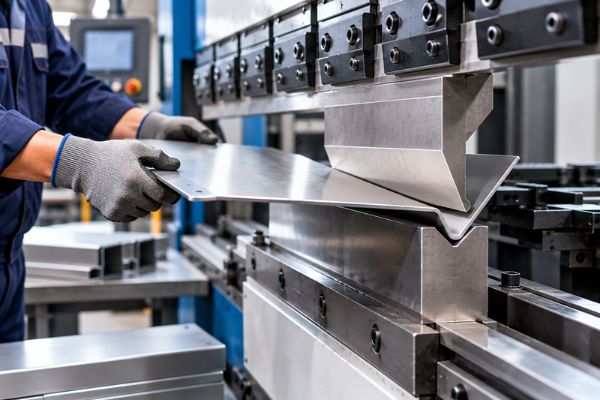
Sheet metal bending is a fabrication process in which a flat sheet is formed into a required angle or shape using controlled force.
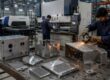
The sheet is placed in a bending machine and pressed using suitable tooling. The metal changes shape without being cut or separated.
Sheet metal bending can be used to produce:
- L-shaped brackets
- U channels
- Electrical panels
- Machine covers
- Enclosures
- Frames
- Support plates
- Industrial cabinets
- Trays
- Fabricated components
The final result depends on material type, sheet thickness, bend angle, tooling, and machine accuracy.
Why Sheet Metal Bending Is Important
Bending helps convert flat metal sheets into functional components.
Accurate bending is important because even a small angle error can affect assembly.
Poor bending may create problems such as:
- Incorrect fitment
- Misalignment
- Weak joints
- Assembly issues
- Rework
- Material waste
- Poor final appearance
Professional bending helps maintain better dimensional accuracy and repeatability.
How Does the Sheet Metal Bending Process Work?
The process normally includes a few important steps.
Drawing Review
The component drawing is checked for:
- Material
- Thickness
- Dimensions
- Bend angle
- Bend radius
- Tolerance
- Quantity
Material Selection
The correct sheet material is selected according to the job requirement.
Cutting
The sheet may first be cut using laser cutting, shearing, or another suitable process.
Bending
The cut sheet is placed in a press brake or bending machine.
The required angle and shape are then formed.
Inspection
The final component is checked for dimensions, angle, and fit.
Types of Sheet Metal Bending
Different bending methods can be used depending on the job.
V-Bending
V-bending is one of the most common methods.
The sheet is pressed into a V-shaped die to form the required angle.
It is suitable for many industrial components.
U-Bending
U-bending is used to create channel-type or U-shaped parts.
It is commonly used for:
- Brackets
- Frames
- Channels
- Supports
Edge Bending
Edge bending is used to form bends along the edge of a sheet.
Multiple Bending
Some components require several bends in one part.
These jobs need proper bend sequence planning to avoid interference and dimensional errors.
The final fabricated component is manufactured according to engineering drawings and application requirements.
Materials Used for Sheet Metal Bending
Sheet metal bending can be performed on different materials.
Common options include:
- Mild steel
- Stainless steel
- Galvanized steel
- Aluminium
- CRCA sheet
- HR sheet
- GI sheet
Mild Steel Sheet Bending
Mild steel is widely used in industrial fabrication because it is strong, economical, and easy to fabricate.
MS sheet bending is commonly used for:
- Machine structures
- Brackets
- Cabinets
- Panels
- Frames
- Industrial supports
Proper bending helps maintain good shape and strength.
Stainless Steel Sheet Bending
Stainless steel is used where corrosion resistance and clean appearance are important.
Applications include:
- Food equipment
- Pharmaceutical equipment
- Electrical enclosures
- Chemical equipment
- Industrial cabinets
- Decorative components
SS sheet bending requires correct tooling and process control to avoid surface damage.
Aluminium Sheet Bending
Aluminium is lightweight and corrosion resistant.
It is often used in:
- Electrical panels
- Covers
- Enclosures
- Machine parts
- Architectural components
Because aluminium behaves differently from steel, proper bend allowance and radius are important.
CNC Sheet Metal Bending
CNC bending machines help improve accuracy and repeatability.
They allow operators to control:
- Bend angle
- Stroke depth
- Back gauge position
- Bend sequence
- Component dimensions
CNC bending is useful when many similar parts are required.
Sheet Metal Bending for Industrial Applications
Professional Sheet Metal Bending Services are used in many industries.
Electrical Industry
Applications include:
- Control panels
- Electrical cabinets
- Enclosures
- Cable trays
- Mounting plates
Machinery Industry
Bending is used for:
- Machine covers
- Frames
- Guards
- Supports
- Structural parts
Automotive Industry
Applications may include:
- Brackets
- Mounting parts
- Sheet assemblies
- Body-related components
Construction Industry
Bending is used for:
- Structural sheets
- Supports
- Frames
- Cladding components
Engineering Industry
Custom bending is commonly required for prototypes, fabricated assemblies, and production components.
Sheet Metal Bending and Laser Cutting
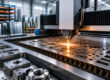
Laser cutting and bending are often used together.
The process can be:
Laser Cutting → Deburring → Bending → Welding → Finishing → Assembly
Laser cutting creates the flat profile.
Bending then converts the profile into the required three-dimensional shape.
Using both services together can improve:
- Accuracy
- Fitment
- Production speed
- Assembly quality
- Component consistency
Why Bend Radius Matters
Every bend has a radius.
The correct radius is important because a very sharp bend may crack the material.
A very large radius may not match the required design.
Bend radius depends on:
- Material type
- Material thickness
- Bend angle
- Tooling
- Application
Proper bend planning helps reduce material damage.
What Is Springback in Sheet Metal Bending?
After the bending force is removed, the metal may move slightly back toward its original position.
This is called springback.
The amount of springback depends on:
- Material
- Thickness
- Bend radius
- Angle
- Tensile strength
Experienced operators compensate for springback during setup.
Benefits of Professional Sheet Metal Bending Services
Professional bending services provide several advantages.
Better Accuracy
Controlled bending helps achieve the required angle and dimensions.
Consistent Results
CNC machines help maintain repeatability for multiple parts.
Lower Material Waste
Correct setup reduces rejected parts and rework.
Faster Production
Modern bending machines can process parts quickly.
Better Assembly
Accurate parts are easier to weld and assemble.
Custom Shapes
Different profiles and angles can be created according to drawings.
What Details Should You Provide for Sheet Metal Bending Work?
Before starting the job, provide complete technical information.
| Requirement | Details |
|---|---|
| Material | MS, SS, aluminium, GI, etc. |
| Thickness | Sheet thickness |
| Dimensions | Length and width |
| Bend Angle | Required angle |
| Bend Radius | If specified |
| Drawing | CAD or fabrication drawing |
| Quantity | Number of parts |
| Tolerance | Required dimensional accuracy |
| Finish | Raw, painted, powder-coated, etc. |
Providing proper drawings helps reduce production errors.
Custom Sheet Metal Bending Services
Many industrial projects require customized bending.
Custom services may include:
- Single bends
- Multiple bends
- Channel bending
- Box bending
- Panel bending
- Enclosure bending
- Bracket bending
- Prototype parts
- Production parts
The process can be planned according to the final assembly requirement.
Sheet Metal Bending Services in Ahmedabad
Ahmedabad has a strong engineering and fabrication industry.
Manufacturers often require bending services for:
- Machinery
- Electrical panels
- Industrial equipment
- Fabricated structures
- Sheet metal assemblies
- Custom components
Vinayak Industries provides Sheet Metal Bending Services in Ahmedabad for different industrial requirements.
Customers can provide drawings, material details, thickness, quantity, and required bend dimensions for job evaluation.
Why Choose Vinayak Industries?
Vinayak Industries provides metal fabrication services including cutting, bending, structural fabrication, and custom industrial fabrication.
Customers looking for Sheet Metal Bending Services can discuss their project requirements based on:
- Material type
- Sheet thickness
- Bend complexity
- Quantity
- Drawing tolerance
- Final application
The aim is to produce accurate components that fit properly during further fabrication and assembly.
Frequently Asked Questions About Heavy Structural Fabrication
Sheet metal bending is a fabrication process used to form flat metal sheets into specific angles and shapes without cutting them apart.
Common materials include mild steel, stainless steel, aluminium, galvanized steel, CRCA, and HR sheets.
Yes. CNC press brake machines are commonly used for accurate and repeatable bending.
You should provide material, thickness, drawing, bend angle, bend radius, quantity, and tolerance requirements.
Yes. Laser cutting and bending are often used together to produce finished fabrication parts.
Yes. Multiple bends can be made according to the drawing and bend sequence.
Vinayak Industries provides sheet metal bending and fabrication services in Ahmedabad for industrial and custom engineering requirements.
Conclusion
Sheet metal bending is an important process in metal fabrication. Accurate bending helps ensure proper fitment, strong assemblies, and better final product quality.
Professional Sheet Metal Bending Services can support different industrial applications using mild steel, stainless steel, aluminium, and other sheet materials.
Vinayak Industries provides customized bending solutions for engineering, electrical, machinery, fabrication, and industrial applications.