

Heavy Duty Steel Fabrication for Industrial Machinery and Equipment
Industrial machines and equipment need strong support structures to work safely and accurately. Machine bases, frames, skids, platforms, and equipment supports may carry heavy loads, vibration, moving machinery, and continuous operational pressure.
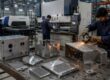
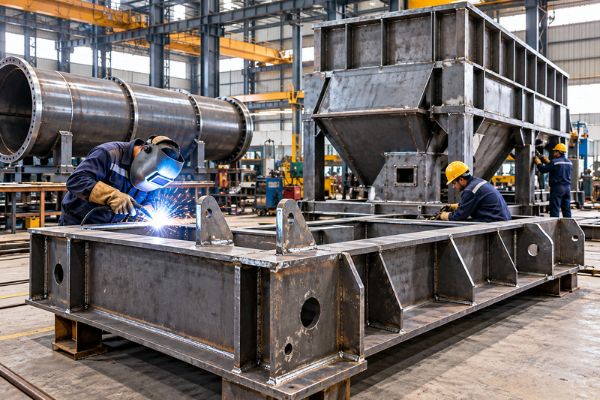
Heavy Duty Steel Fabrication is used to manufacture strong steel components for industrial machinery and engineering projects. The process includes cutting, bending, welding, drilling, machining, fitting, and assembling steel according to approved drawings and project requirements.
For manufacturers, OEMs, engineering companies, and industrial plants, properly fabricated steel structures can improve machine stability, installation accuracy, and long-term performance.
What Is Heavy Duty Steel Fabrication?
Heavy Duty Steel Fabrication is the process of converting thick steel plates, channels, beams, angles, and structural sections into strong industrial components.
Unlike normal sheet metal work, heavy fabrication generally involves thicker materials, larger components, and higher load requirements.
Common fabrication processes include:
- Steel plate cutting
- CNC cutting
- Bending
- Drilling
- Welding
- Grinding
- Machining
- Assembly
- Surface finishing
- Dimensional inspection
The final fabricated component is manufactured according to engineering drawings and application requirements.
Where Is Heavy Duty Steel Fabrication Used?
Heavy fabrication is used in industries where equipment and structures need higher strength and stability.
Common applications include:
- Machine bases
- Industrial frames
- Equipment skids
- Heavy platforms
- Conveyor structures
- Machinery foundations
- Equipment supports
- Structural brackets
- Industrial walkways
- Process plant structures
- Material handling equipment
- Custom engineering assemblies
The exact fabrication method depends on load, size, working conditions, and project design.
Heavy Duty Steel Fabrication for Machine Bases
Machine bases support the complete weight of industrial equipment.
They may also need to handle:
- Vibration
- Dynamic loads
- Rotating equipment
- Motor movement
- Impact loads
- Alignment forces
A properly fabricated machine base should provide:
- Structural rigidity
- Accurate dimensions
- Strong welded joints
- Correct mounting-hole positions
- Flat equipment mounting surfaces
- Stable support
Poor fabrication can create alignment and vibration problems during machine operation.
Heavy Fabrication for Industrial Equipment Frames
Industrial equipment frames provide structural support for machines and production equipment.
These frames may hold:
- Motors
- Pumps
- Gearboxes
- Control panels
- Conveyors
- Tanks
- Hydraulic systems
- Process equipment
Correct dimensional accuracy is important because the complete machinery is often assembled on the fabricated frame.
Even small dimensional errors can create difficulties during final assembly.
Heavy Fabricated Skids for Industrial Equipment
Equipment skids are commonly used to mount several components on one fabricated steel base.
Equipment Commonly Mounted on Skids
A skid may support:
- Pumps
- Motors
- Compressors
- Filters
- Valves
- Piping
- Electrical equipment
- Process equipment
Heavy Duty Steel Fabrication helps create a stable structure that keeps all components in the required position.
The skid design should consider equipment weight, piping layout, mounting points, and lifting requirements.
Materials Used in Heavy Duty Steel Fabrication
Material selection is important for strength and durability.
Why Steel Thickness Matters
Steel thickness affects the load-carrying capacity of a fabricated component.
However, simply choosing a thicker plate is not always the best solution.
Engineers should consider:
- Load distribution
- Structural design
- Support points
- Welding requirement
- Final component weight
- Machining requirement
- Fabrication cost
Proper engineering can provide the required strength without unnecessarily increasing material weight.
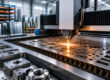
Cutting Process in Heavy Duty Steel Fabrication
Accurate cutting is one of the first important steps in heavy fabrication.
Depending on the material and thickness, different cutting methods may be used.
Common Cutting Methods
- CNC laser cutting
- Plasma cutting
- Gas cutting
- Saw cutting
Good cutting helps maintain dimensional accuracy and makes welding, drilling, and assembly easier.
Incorrect cutting can create fitting problems during later fabrication stages.
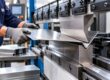
Bending and Forming of Heavy Steel
Some heavy fabricated components require bending before welding and assembly.
Bending may be required for:
- Structural plates
- Heavy brackets
- Frames
- Channels
- Supports
- Machine components
Important Factors During Bending
The fabricator should consider:
- Material grade
- Steel thickness
- Bend radius
- Bend angle
- Springback
- Tooling requirement
Correct bending helps prevent cracking and dimensional errors.
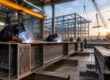
How Welding Distortion Is Controlled
Welding generates heat, and this heat can cause steel components to move or change shape.
This problem is known as welding distortion.
Distortion can affect:
- Flatness
- Alignment
- Hole position
- Overall dimensions
- Machine mounting surfaces
Methods Used to Control Distortion
Fabricators may use:
- Proper welding sequence
- Tack welding
- Suitable fixtures
- Balanced welding
- Controlled heat input
- Regular dimensional checking
Distortion control is especially important in large frames and machine bases.
Heavy Duty Steel Fabrication vs Light Fabrication
| Point | Heavy Duty Steel Fabrication | Light Fabrication |
|---|---|---|
| Material | Thick plates and structural sections | Thin metal sheets |
| Application | Machinery and heavy structures | Covers, cabinets and light components |
| Load | High | Low to medium |
| Welding | Heavy structural welding | Light welding |
| Component Size | Medium to very large | Usually smaller |
| Main Requirement | Strength and rigidity | Shape and appearance |
Both processes are useful, but they serve different applications.
Why Choose Vinayak Industries?
Vinayak Industries provides metal fabrication solutions for different industrial applications.
Capabilities can include:
- Heavy steel fabrication
- Structural fabrication
- Sheet metal fabrication
- Laser cutting
- CNC bending
- Welding
- Machining
- Custom fabrication
Projects can be planned according to steel grade, thickness, dimensions, welding requirements, machining needs, and final application.
Frequently Asked Questions About Heavy Structural Fabrication
Heavy Duty Steel Fabrication is the process of cutting, bending, welding, machining, and assembling thick steel plates and structural sections into strong industrial components.
It is commonly used for machine bases, industrial frames, equipment skids, platforms, conveyor structures, equipment supports, and custom engineering assemblies.
Mild steel, structural steel plates, channels, angles, beams, hollow sections, and other steel sections can be used depending on the project.
Yes. Components can be fabricated according to CAD drawings, engineering drawings, approved dimensions, and customer specifications.
Welding connects the main structural components. Proper welding helps maintain strength, stability, and long-term performance.
Yes. Drilling, tapping, boring, facing, and surface machining can be completed after fabrication when required.
Vinayak Industries provides heavy steel fabrication services in Ahmedabad for machinery, frames, skids, platforms, equipment supports, and other industrial requirements.
Conclusion
Heavy Duty Steel Fabrication is important for industrial machinery, equipment skids, machine bases, structural frames, platforms, and custom engineering assemblies.
A successful fabrication project depends on correct material selection, accurate cutting, proper bending, controlled welding, dimensional inspection, machining, and final assembly.
Vinayak Industries provides Heavy Duty Steel Fabrication solutions for industrial and engineering requirements in Ahmedabad.